Stop Guessing at the Supermarket: How to Create a "Buy Price" List and Cut Food Costs by 30%
Updated 2026-07-07 12:08:04
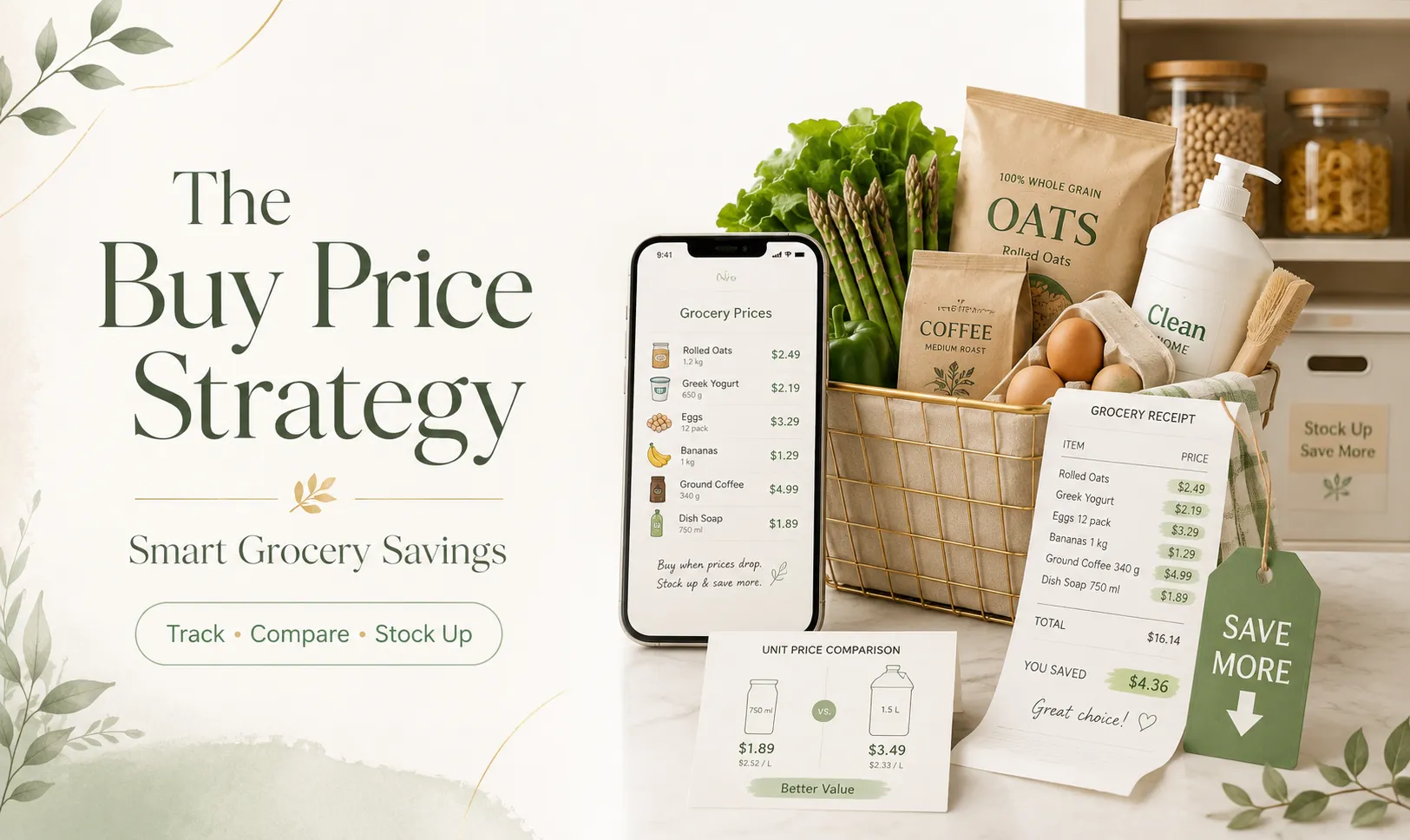
When you walk into a grocery store, you are bombarded by giant, colorful signs screaming "SALE!", "Special Value!", or "Buy 2 For $7!" Because food prices fluctuate constantly due to inflation and seasonal supply shifts, retail marketers rely on a specific psychological trick: they know you don't actually remember what items normally cost. As a result, shoppers routinely buy items on "sale" that are actually priced higher than they were a month ago.
If you want to protect your budget, you need to strip away the emotion and start buying prices, not products. The absolute best way to do this is by establishing a personal "Buy Price" List.🎯
1. Defining Your Baseline "Buy Price"
A "Buy Price" is the specific threshold at which a product becomes an authentic, undeniable bargain. It is the exact price point where you should stop buying just what you need for the week and start stocking up for the month.
-
How to build it: Pick the 15 to 20 staple items that make up the bulk of your weekly grocery bill (e.g., chicken breasts, coffee, laundry detergent, eggs, cereal, paper towels). For the next three shopping trips, take a quick photo of the shelf price tags.
-
The Formula: Note the standard price and the lowest sale price you observe. The lowest sale price becomes your official "Buy Price" moving forward.
2. The Shelf Tag Trap: Mastering Unit Pricing
When tracking your buy prices, ignore the main retail price on the package. Brands frequently change the physical size of their boxes and bottles to mask price increases—a phenomenon known as "shrinkflation." Instead, train your eyes to look at the tiny number in the corner of the shelf label: The Unit Price.
| Product | Retail Price | Package Size | Unit Price (The Real Metric) |
| Brand A Cereal | $5.99 | 12 oz | $0.50 per oz |
| Brand B Cereal (Family Size) | $7.49 | 18 oz | $0.41 per oz |
Even though the "Family Size" box costs more out-of-pocket, the unit price reveals it is nearly 18% cheaper per ounce. Your buy price list should always be calibrated by unit metrics (e.g., price per ounce, price per pound, or price per 100 sheets for paper goods).
3. How to Execute the Strategy
Once your list is set up in your phone notes, shopping becomes purely mechanical:
-
If an item is listed above your buy price: Buy the absolute bare minimum required to get through the week, or substitute it with a store-brand alternative.
-
If an item hits or drops below your buy price: Clear a shelf in your pantry and buy enough to last your household for 4 to 6 weeks. By systematically timing your volume purchases around genuine historical lows, your baseline monthly grocery expenditure will naturally plummet.